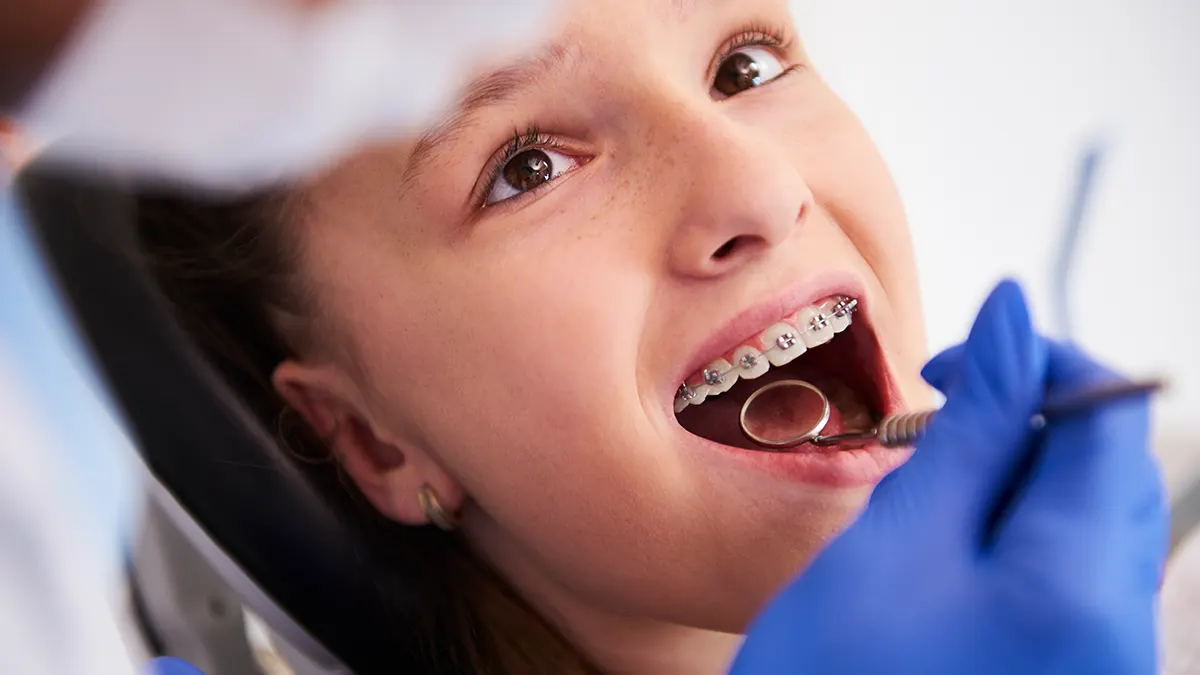
What Is Orthodontics?
Orthodontics is the dental speciality concerned with the position of the teeth and jaws. Crowding, spacing, protruding front teeth, a lower jaw positioned too far back or forward, and bite disorders all fall within its scope.
Treatment often begins with an aesthetic concern, but the benefits go well beyond appearance. Well-aligned teeth are far easier to clean, which measurably reduces the long-term risk of decay and gum disease. An incorrect bite can also load some teeth disproportionately, causing wear and placing strain on the jaw joint.
Treatment Options
Fixed braces remain the most versatile approach and can address virtually any case. Alongside metal brackets, tooth-coloured ceramic brackets are available for a more discreet appearance.
Clear aligners are removable and almost invisible, and work well for mild to moderate crowding. Their success depends directly on being worn 20 to 22 hours a day, which makes patient compliance the single most important factor in the outcome.
Lingual braces are fitted to the tongue side of the teeth and cannot be seen from the front, making them a practical alternative for adults concerned about visibility.
How Long Does Treatment Take?
Treatment typically lasts between 12 and 24 months. The main variables are the complexity of the case, the patient''s age, whether extractions are required, and compliance. Fixed appliances need adjustment every four to eight weeks; aligner reviews are usually less frequent.
Treatment does not end when the braces come off. A retention phase is required while the teeth stabilise in their new positions, using a fine wire bonded behind the teeth or a clear retainer worn at night. Neglecting retention allows the teeth to drift back — by far the most common cause of orthodontic relapse.
At What Age Should Treatment Begin?
A first orthodontic assessment is recommended at around age seven, once the first permanent molars and incisors have erupted. At this stage crossbites, severe narrowing and the effects of habits such as thumb sucking can be identified early. An early assessment does not necessarily mean early treatment; in many cases the correct decision is simply to monitor growth.
Fixed treatment usually starts between 11 and 14, once the permanent dentition is complete. That said, teeth can be moved at any age provided the gums and supporting bone are healthy — adults now make up a substantial proportion of orthodontic patients.
Care During Treatment
Brackets make plaque accumulation easier, so oral hygiene matters more during treatment than at any other time. Brushing after every meal, using interdental brushes and, where helpful, a water flosser are all recommended. Avoiding hard and sticky foods reduces bracket breakages. Where hygiene is inadequate, permanent white marks can develop around the brackets; these remain after treatment, which is why preventing them is treated as part of the therapy itself.