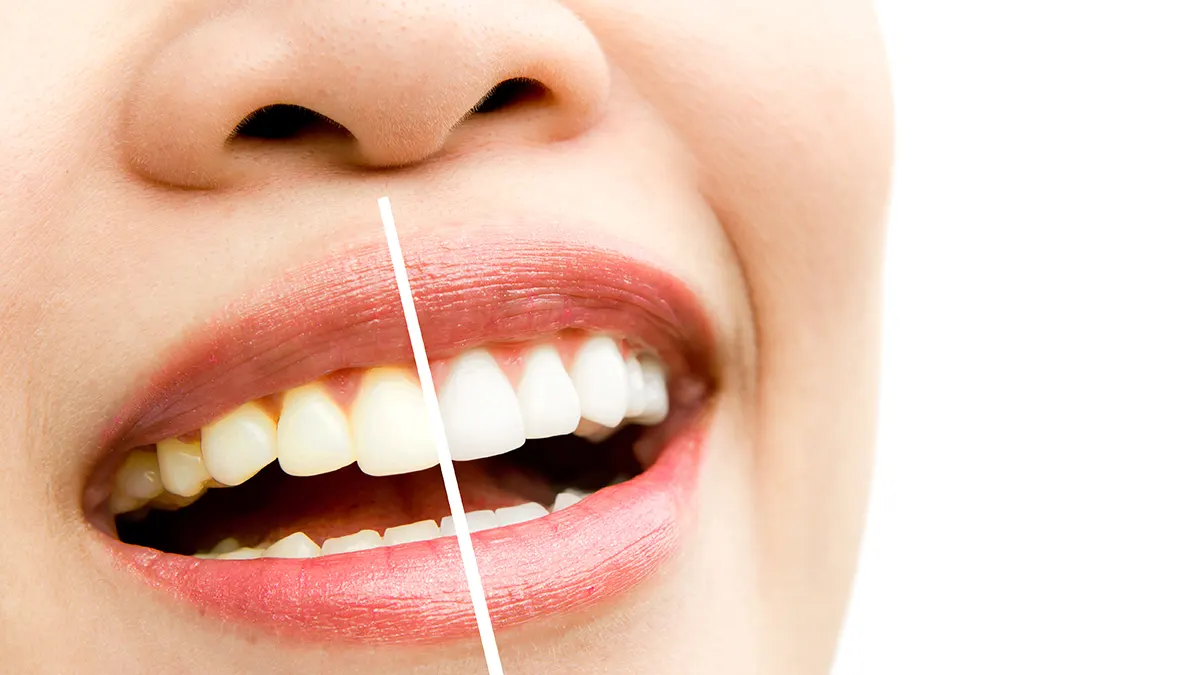
What Is Teeth Whitening?
Whitening is the chemical lightening of discolouration held within the pores of enamel and dentine, using gels containing hydrogen peroxide or carbamide peroxide. The gel passes through the enamel and breaks the large, coloured molecules responsible for staining into smaller, colourless fragments. No tooth structure is drilled, cut or covered; the procedure works entirely on the tooth''s own colour.
Why Do Teeth Discolour?
Discolouration is either extrinsic or intrinsic. Extrinsic staining accumulates on the enamel surface from coffee, tea, cola, red wine, dark fruit juices and tobacco. Intrinsic discolouration lies deeper within the tooth: certain antibiotics taken during development, excessive fluoride, death of the pulp after trauma and a history of root canal treatment all fall into this category.
Ageing is a natural factor as well. Enamel thins over time, allowing the naturally yellower dentine beneath to show through more clearly. Teeth appearing darker in later life is therefore a physiological process rather than a pathological one.
Treatment Methods
In-clinic whitening is carried out under direct supervision. After the gums are isolated with a protective barrier, a high-concentration gel is applied and, where indicated, activated with light. A single session of around an hour produces a clearly visible result, making this the option of choice for patients who want rapid change.
Home whitening uses custom trays made from impressions of your mouth. A lower-concentration gel is applied in the trays and worn for a few hours a day, or overnight, for two to three weeks. Because the change is more gradual, sensitivity is usually less pronounced.
A combined approach reinforces an in-clinic session with home whitening afterwards; clinical experience shows this produces the most stable results.
For a single darkened tooth that has had root canal treatment, internal bleaching is used, with the gel placed inside the tooth to lighten it from within.
Is It Harmful?
Numerous studies have shown that dentist-supervised whitening causes no lasting damage to enamel. However, the mouth must be healthy beforehand: whitening in the presence of untreated decay, a leaking filling or inflamed gums can cause considerable discomfort. An examination and, where needed, a professional clean are therefore an integral part of the treatment.
Cold sensitivity lasting a few days afterwards is common and resolves on its own; desensitising toothpastes provide noticeable relief in the meantime. Unregulated products sold online, at inappropriate concentrations, can cause gum burns and uneven lightening, and are not recommended.
How Long Do Results Last?
Whitening is not permanent but it is long-lasting. Most patients retain their result for one to two years, and longer where dietary habits allow. Rinsing with water after strongly coloured drinks, not smoking and attending regular professional cleaning all extend the result appreciably. Many patients carry out a short home top-up course every year or two.
One important point: whitening only affects natural tooth structure. Crowns, fillings and porcelain restorations do not change colour. If you have visible restorations at the front of your mouth, they may need replacing afterwards to match your new shade — something best discussed at the planning stage.