Why Gum Health Matters
Teeth are attached to the jawbone through the gums and the periodontal ligament. When these supporting tissues are unhealthy, even perfectly sound teeth with no decay begin to loosen and can be lost. In fact, the most common cause of tooth loss in adults is not decay but advanced gum disease.
What makes the condition insidious is that it usually progresses without pain. Patients often seek treatment once a tooth starts to move — by which point bone loss is already considerable. Early diagnosis is therefore even more decisive than the treatment itself.
What Are the Symptoms?
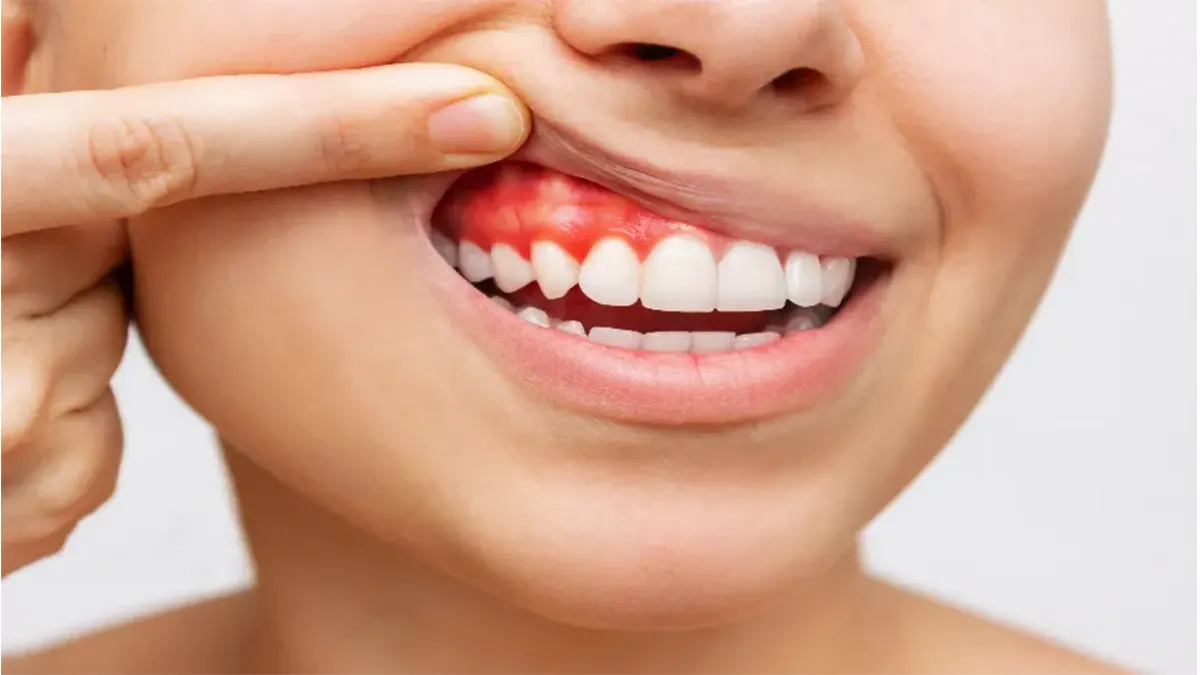
Bleeding while brushing is the earliest and most reliable sign. Healthy gums do not bleed; the widespread belief that "everyone''s gums bleed a little" is simply incorrect. Other symptoms include redness and swelling, persistent bad breath, teeth appearing longer as the gums recede, sensitivity to hot and cold, new gaps opening between the teeth, and mobility.
Gingivitis and Periodontitis
Gingivitis, the first stage, affects only the gum tissue and is entirely reversible. With professional cleaning and good daily hygiene, the gums return to health within a few weeks.
Left untreated, the condition progresses to periodontitis. Inflammation now spreads to the bone surrounding the tooth, which begins to resorb irreversibly. Deep spaces known as pockets form between gum and tooth, creating a sheltered environment where bacteria thrive and the cycle continues. Lost bone does not regenerate on its own, so the aim of treatment is to halt progression and preserve the remaining support.
How Is It Treated?
Treatment begins with a detailed periodontal examination: pocket depths are measured, bone levels assessed radiographically and the stage of disease established.
Scaling and root planing forms the foundation of treatment. Hard deposits above and below the gum line are removed with ultrasonic and hand instruments, and root surfaces are smoothed so that bacteria cannot readily adhere. In deeper pockets this is carried out quadrant by quadrant under local anaesthetic.
Where deep pockets do not respond to non-surgical care, flap surgery allows the gum to be lifted for direct access to the root surface. In cases where the pattern of bone loss is favourable, bone grafting and guided tissue regeneration can recover part of the lost support. Where recession causes sensitivity or aesthetic concern, gum grafting procedures are used to cover the exposed root.
The Link With General Health
Periodontal disease does not remain confined to the mouth. Research has demonstrated associations between advanced gum disease and cardiovascular disease, poorly controlled diabetes and an increased risk of preterm birth. The relationship with diabetes runs both ways: uncontrolled diabetes worsens gum disease, while untreated gum disease makes blood sugar harder to control.
After Treatment
Periodontal therapy is not a procedure that ends but a programme of care that continues. Supportive periodontal maintenance is normally scheduled every three to six months. Daily home care — particularly interdental cleaning — is the single greatest determinant of long-term success. Smoking is the strongest individual factor reducing response to treatment and increasing recurrence.