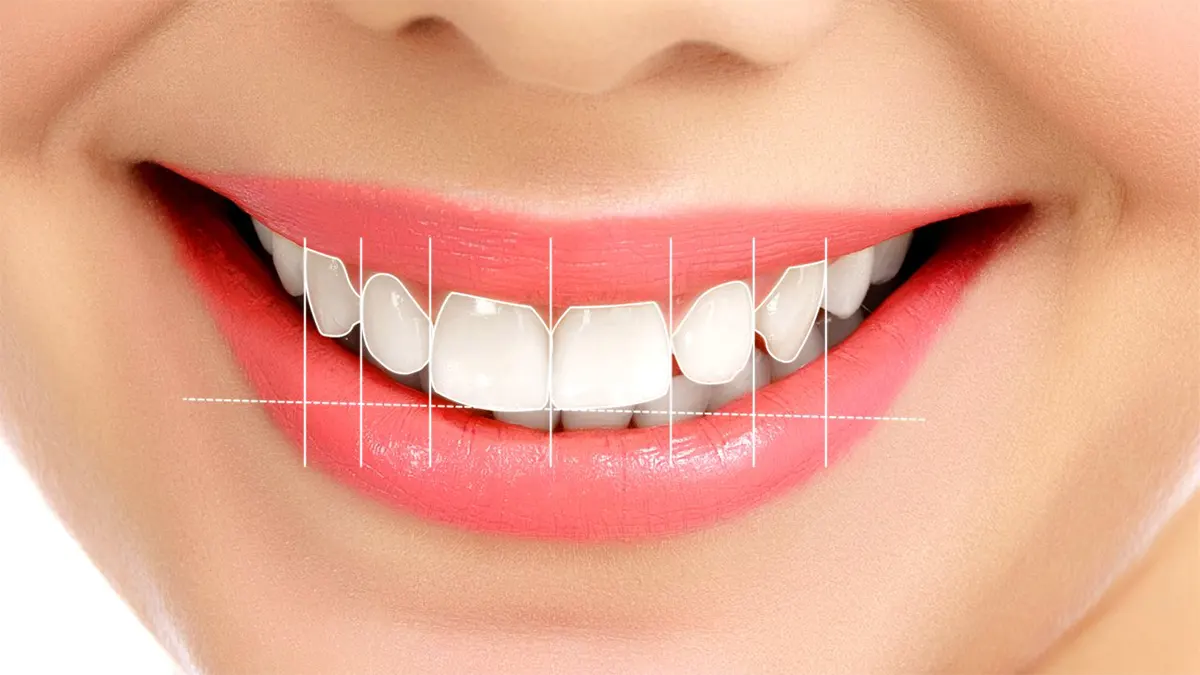
What Is Smile Design?
Aesthetic smile design is not the name of a single procedure but a planning approach that considers the colour, shape, size and alignment of the teeth together with the gum line as one whole. The goal is not simply white teeth, but a natural smile in proportion with the patient''s facial features, lip line, gender and age. The clearest sign of a well-executed smile design is that observers do not remark on the dentistry — they simply find the smile attractive.
For that reason, the design begins with the face rather than the teeth. We assess how far the lips part when you smile, how much gum the upper lip reveals, the relationship of the dental midline to the facial midline, and how the smile curve follows the line of the lower lip.
How Is Digital Smile Design Carried Out?
The first stage involves facial and intraoral photographs and video, together with digital or conventional impressions. These records are transferred into design software, where the proportions and shapes of the new teeth are planned. Before any treatment has begun, you see a simulation of the proposed result on your own photograph and can request changes at that point.
Once the plan is approved, a mock-up is placed: a temporary material is applied over the teeth without any preparation, allowing you to see and live with the new smile in the mirror, and to judge how it looks while you speak and laugh. This step ensures the final decision rests with you before anything irreversible is done.
Which Treatments May Be Involved?
Smile design combines different treatments according to need. Where colour is the only concern, whitening alone may be sufficient. For issues of shape, size and mild irregularity, laminate veneers are preferred; these usually require around half a millimetre of preparation from the front surface, and in selected cases none at all.
Where a tooth carries large fillings, has had root canal treatment or is deeply discoloured, a full-coverage zirconium crown is the more appropriate choice. Asymmetries in gum level, or a "gummy smile", are addressed with gingival contouring — often referred to as pink aesthetics. When teeth are significantly misaligned, repositioning them first with clear aligners or fixed orthodontics is usually far more conservative than reducing healthy tooth structure.
No Aesthetics Without a Healthy Foundation
Aesthetic work is always built on a healthy base. Decay, gum inflammation, teeth requiring root canal treatment and any bite disorders are treated before the design is executed. Porcelain placed against inflamed gum tissue quickly loses both its marginal fit and its appearance. In patients who clench or grind, aesthetic restorations placed without a protective night guard carry a high risk of fracture — which is why habits form part of the treatment plan too.
How Long Do the Results Last?
Porcelain restorations are highly stain-resistant and, with good care, serve for ten to fifteen years and frequently longer. Longevity depends above all on daily oral hygiene, six-monthly reviews, avoiding biting on hard objects, and wearing a night guard where grinding is present. Because natural teeth change colour over time, regular professional cleaning helps keep any unrestored teeth in harmony with your new restorations.