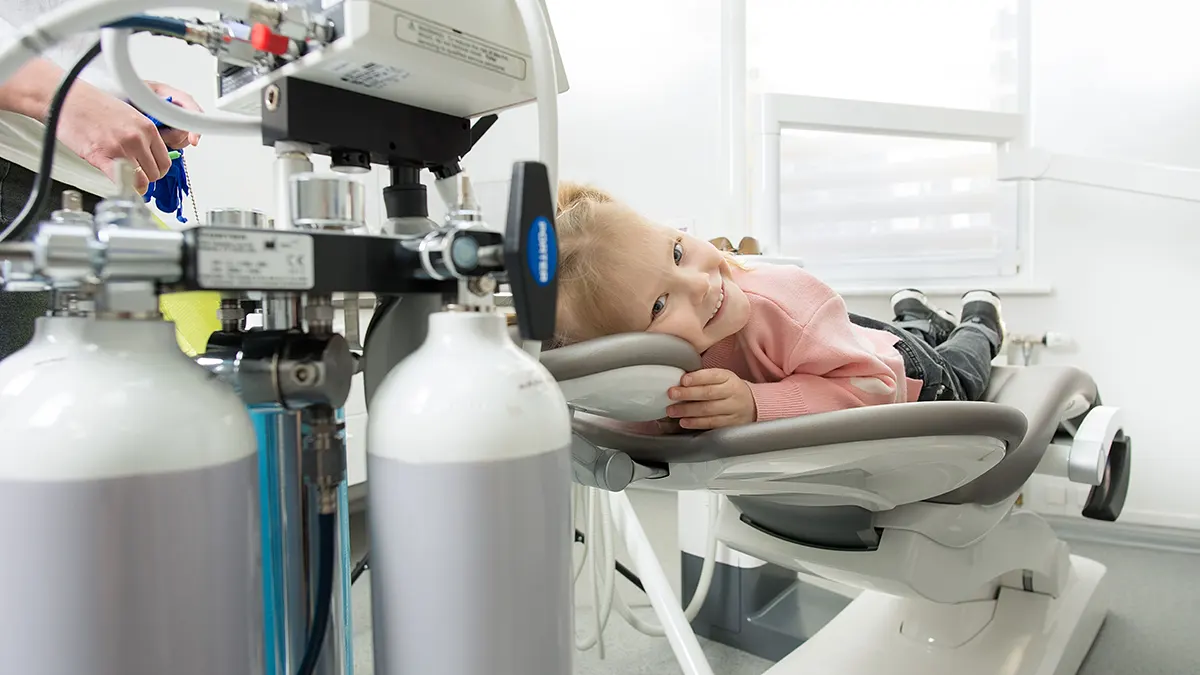
Why Is Paediatric Dentistry a Separate Field?
Children are not small adults. The structure of baby teeth differs from that of permanent teeth: the enamel and dentine layers are thinner, so decay progresses far more quickly and can reach the pulp in a short time. Children also differ entirely from adults in how they approach treatment, in their attention span and in the way they need to be communicated with.
Paediatric dentistry is a distinct speciality built around these differences. Our aim is not only to treat the problem in front of us but to establish a positive relationship with dentistry and prevent dental anxiety from taking hold. How the first experience goes often shapes a person''s oral health habits for life.
When Should the First Visit Be?
The first dental visit should take place within six months of the first tooth appearing, and by the first birthday at the latest. These early appointments are short, focused on familiarisation and usually involve no treatment at all. The purpose is for the child to get to know the clinic and the dentist, and for parents to receive sound guidance on care and diet.
The great advantage of an early introduction is that the child comes to the clinic for the first time without pain rather than because of it — so the first encounter with a dentist is associated with a positive experience.
Preventive Treatments
Fissure sealants involve sealing the deep grooves on the biting surfaces of the back teeth with a flowable material. Because most decay begins in these hard-to-clean grooves, sealants substantially reduce risk. The procedure is painless, requires no anaesthetic and takes only a few minutes.
Fluoride varnish strengthens enamel against acid attack and can reverse very early lesions that have not yet formed a cavity. It is usually applied at six-monthly check-ups.
Space maintainers preserve the gap left by a baby tooth lost too early. When a baby tooth is lost prematurely, the neighbouring teeth drift into the space and leave insufficient room for the permanent tooth beneath — creating a need for orthodontic treatment later on.
Why Treat Baby Teeth at All?
"They''re going to fall out anyway" is the most common misconception in paediatric dentistry. Baby teeth are essential not only for chewing and nutrition but for the correct development of speech. Their most critical role is guiding the permanent teeth into position.
Untreated decay in a baby tooth can also progress to an abscess, and that infection may damage the developing permanent tooth bud directly beneath it. Fillings, root canal treatment and crowns are all carried out on baby teeth where indicated.
Diet and Oral Care
How often sugar is consumed matters more than how much. Every exposure triggers an acid attack lasting around twenty minutes, so grazing through the day or sipping sweet drinks leaves teeth under near-constant attack. Keeping sweets to mealtimes and offering water in between is a highly effective preventive measure.
Falling asleep with a bottle is a leading cause of early childhood decay, because saliva flow drops during sleep and sugars remain in prolonged contact with the teeth. Brushing should begin as soon as the first tooth appears, and children need help until around the age of seven or eight — before that their manual dexterity is simply not sufficient to clean effectively.